
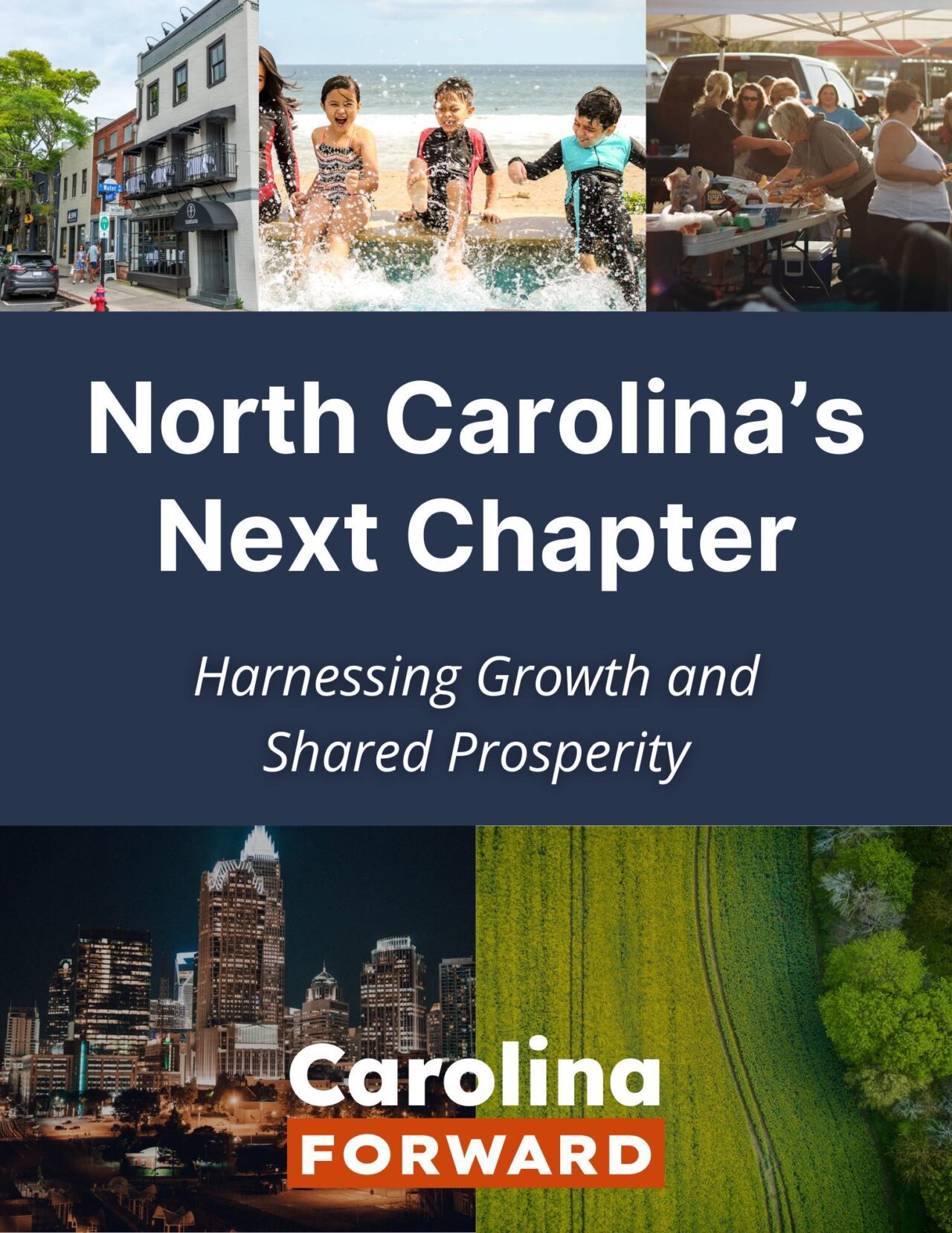
Today, Carolina Forward is releasing our latest policy report: North Carolina’s Next Chapter: Harnessing Growth and Shared Prosperity. Our state is entering a defining new era - one that demands clarity, resolve, and long-term thinking.
Policy
North Carolina’s Next Chapter
A strategy for North Carolina’s future
North Carolina is growing at a remarkable pace. The state recently surpassed 11 million residents and added more than 165,000 people in a single year, one of the largest increases in the nation. Demographers project that North Carolina will become the 7th most populous state by the early 2030s, adding between 1 and 3 million residents over the next two decades.
This rapid growth underscores what so many already know: North Carolina is an exceptional place to live, work, and raise a family. But growth also brings real challenges. Housing costs are rising faster than wages. Roads and transit systems are straining under demand. Schools are overcrowded in some areas and under-enrolled in others. Rural communities face shrinking populations and fewer healthcare options. The choices we make now will define the state’s future for decades.
Uneven Growth and Diverging Futures
Population growth in our state is increasingly concentrated in major metro areas such as Charlotte, Raleigh, Durham, and Wilmington. Raleigh alone surpassed 500,000 residents in 2024. Coastal and mountain counties are also attracting new residents, particularly retirees and remote workers seeking natural amenities.
In contrast, many rural counties are experiencing economic stagnation and population decline, especially in the northeast and far west of the state. Younger residents continue to leave these areas in search of opportunity in metro areas; in their place, nearly all rural population growth is coming from out-of-state retirees. These dual effects worsen birth rates and worsen the long-term demographic challenges rural communities face. These shifts make it harder for local governments to maintain schools, roads, and essential services.
Without a statewide strategy, the divide between fast-growing and struggling counties will deepen. That divide will make it harder to pass the investments North Carolina needs to remain competitive.
Housing: A Crisis Touching Every Region
Housing affordability is now one of the state’s most pressing issues. More than one million North Carolinians spend over a third of their income on housing. Median home prices have risen 58 percent since 2017, while incomes have not kept pace. The statewide shortfall now exceeds 764,000 homes through 2029.
Urban regions face bidding wars, soaring rents, and rapid gentrification. Rural areas struggle with aging housing stock and wages that are too low for even modest homes. Without a significant increase in supply and updated zoning laws, affordability will continue to erode.
Transportation: A System Falling Behind
North Carolina maintains the second-largest state-run road system in the United States. A third of major roads are in poor or mediocre condition. Congestion is worsening, too. Raleigh drivers lose 36 hours per year in traffic, and Charlotte commuters lose 47.
Transit expansion has stalled. Projects such as Charlotte’s Silver Line and the Triangle commuter rail have run into political and funding barriers. Rural counties face even more severe challenges with limited public transit and long distances to jobs and healthcare.
North Carolina, if it fails to modernize funding and invest in both roads and transit, will face worsening bottlenecks that harm economic growth.
Education: Overcrowding, Decline, and a Shrinking Teacher Pipeline
Fast-growing counties struggle with overcrowded schools, while rural districts face declining enrollment and shrinking tax bases. North Carolina has not passed a statewide school construction bond since 1996, even though unmet school capital needs now exceed $13.5 billion.
The teacher pipeline has also weakened significantly. Enrollment in UNC education programs has declined 35 percent. Districts across the state cannot fill positions in subjects such as math, science, and special education. Rural schools, which cannot match urban salary supplements, struggle the most.
These trends threaten North Carolina’s long-term workforce and economic competitiveness.
Healthcare: Metro Expansion and Rural Loss
Urban regions are dominated by large hospital systems, many of which have merged and reduced competition, contributing to higher prices for patients. Rural communities face the opposite problem. Eight rural hospitals have closed since 2010, leaving some counties without emergency rooms or maternity care.
Medicaid expansion increased coverage for hundreds of thousands, but recent federal policy changes have put that progress at risk. Many rural counties already face severe shortages of providers. Losing hospitals accelerates economic decline and worsens health outcomes.
Building One Stronger North Carolina
North Carolina stands at a turning point. The decisions we make today will shape our state’s future for decades to come. In North Carolina’s Next Chapter, we provide a policy roadmap for lawmakers to make the key investments today that will harness growth to serve all our state’s people:
-
Build more housing and modernize zoning.
-
Modernize transportation funding and expand transit.
-
Pass a statewide school construction bond and rebuild the teacher pipeline.
-
Stabilize rural healthcare and protect Medicaid expansion.
-
Reform the tax structure so counties are not forced to carry the burden alone.
-
Invest intentionally in rural communities so growth is shared.
North Carolina has the momentum and the talent to build a stronger future. With thoughtful leadership and smart investments, we can ensure that every community, from Murphy to Manteo, shares in the state’s success.