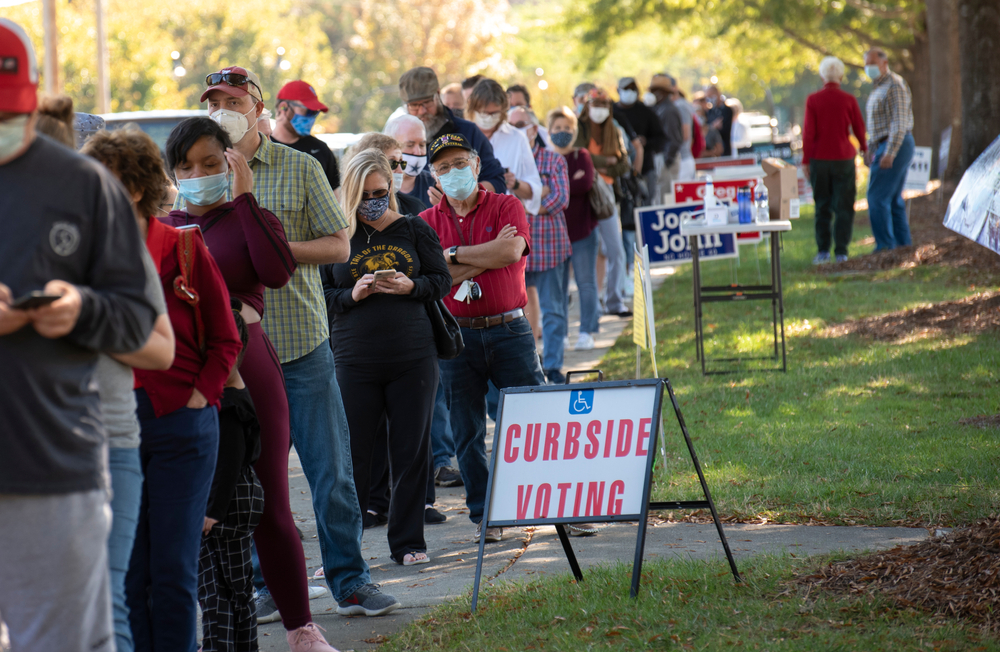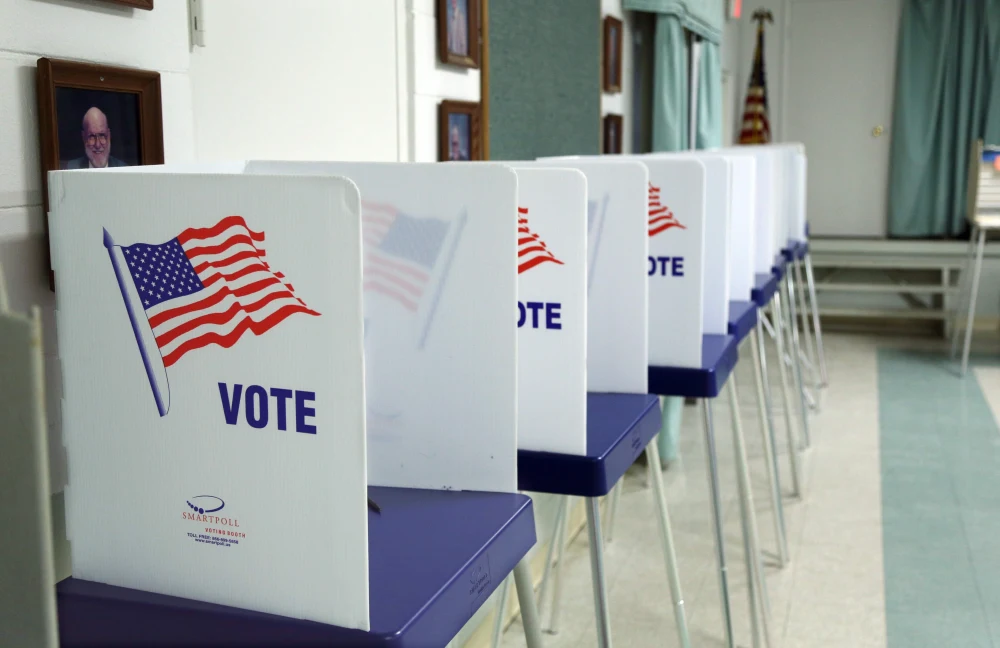
Voter fraud is extremely rare. Studies from multiple states have established that voter fraud occurs less than 0.0001% of the time, while a recent study of Ohio’s 2024 election determined that 1% of the voters removed from the rolls–almost 1,600 people–were in fact eligible voters who should not have been removed.
That makes the removal of a duly registered voter almost 10,000 times more likely than an instance of voter fraud.
Despite the remarkable security of our elections, Republicans dropped a bill Friday night that proposes changes in search of a problem. The changes include a new partisan fiefdom for the State Board of Elections (SBOE) Executive Director, a new path for the SBOE to secure private legal counsel and exchange secret messages,
To contact your House Rep about this bill, click here. For more on the proposed changes, read on.
New Partisan Fiefdom for SBOE Director
Section 3.5 gives the Executive Director of the State Board of Elections sole authority to hire up to 25 employees outside of the typical, nonpartisan professional structure of the department.
State Auditor Dave Boliek appointed Dallas Woodhouse, the former executive director of the NCGOP, to serve as the State Board of Elections’ “liaison” to county elections officials. The NCGOP retained private counsel to pursue a massive voter disenfranchisement campaign in the 2024 election and has used its control of the state board to restrict college students’ access to polling places at the behest of a controversial election lawyer.
Election Officials Prohibited From Encouraging Voting
Section 3.1 prohibits members of county boards of election or the state board of elections not only from supporting partisan candidates, but also ballot referenda issues and voting in general.
New Path to Private Counsel and Secret Messages for SBOE
Section 3.2 permits the State Board to retain outside counsel for any litigation that they are contemplating or have actually initiated as well as for any matter that arises in connection with the Executive Director’s actions under the elections chapter. It also explicitly states that any records created by communication between the Board and its attorneys are not public records and are not open to public inspection.
This eliminates the General Assembly’s control of the State Board’s ability to retain outside counsel, permits them to circumvent the Attorney General’s office (which exists to represent the state), and expands the scope of the issues for which they are allowed to retain private counsel.
New Authority to Remove Precinct Officials
County election boards already have the ability to remove appointed precinct officials. To do so, they must give the official notice and hold a formal hearing. This makes it impossible for a county board to rapidly and secretly eliminate staff on the spur of the moment.
This new bill gives county boards the authority to remove election officials on election day for “incompetency or failure to discharge duties.” This standard is highly subjective, and the ability to remove staff on the day of an election exposes county boards to the possibility of pressure from their parties or from elected officials in their party to take actions that benefit the party.
The bill does not outline an appeal process, and states that boards require only a majority of members to be present to utilize these powers. All one hundred county boards are currently controlled by Republican majorities appointed by the State Auditor.
The Auditor’s office recently pressured Republican county board members in Jackson County to eliminate specific polling sites, per comments at a board meeting and texts from the Jackson County Republican Party Chair, even though board members felt that those sites were the best and fairest locations.
Banning Ranked-Choice Voting
Ranked-choice voting allows voters to rank every candidate for an office in order of preference. Imagine you have four candidates running for Town Dogcatcher: A, B, C, and D. You really want D to win, you like C, B is ok, and you absolutely hate A.
When you go to vote, you rank the candidates on your ballot in the following order:
- D
- C
- B
- A
For any candidate to win, they have to get 50% +1 of the votes cast. No candidate crosses that threshold in round one, so they eliminate the candidate with the fewest votes. In round 1, that turns out to be your favorite candidate, D.
Everyone who ranked candidate D in first place now has their vote transferred to the candidate they ranked second, so your vote transfers to candidate C. Candidate C earned 47% of the vote in round one. Thanks to voters like you who ranked D first and C second, they pick up another 12% of the vote. With 59%, candidate C wins the race.
This type of voting gives voters a greater ability to express their preferences. This bill would make it illegal.
Removing Voters and Challenging Ballots
Section 2.7 of the bill requires county boards of election to eliminate any voters flagged by federal agencies as dead within one week of receipt of the list. The compressed timeline increases the risk of accidental, inaccurate voter removal.
Section 2.10 establishes a mandatory statewide audit of all ballots that must be completed by the sixth day after an election. It also requires county boards to challenge any ballots determined to be ineligible by the day before votes are canvassed (typically, this means within ten days of an election).
New Auditor Duties
Section 2.13 requires the State Auditor to conduct post-election audits in multiple counties to review their election systems and controls. These audits are to occur after the elections have been certified and may not be used to challenge the final result of an election. County boards must submit reports outlining how to rectify any errors, inefficiencies, or vulnerabilities identified by the Auditor in their procedures.
New Party Affiliation Requirement
Section 2.15 stipulates that candidates for office must now be registered members of a party for 365 days prior to filing their notice of candidacy unless granted a waiver by the state executive committee of that party.
Restricting Overseas Citizen Voting
Section 4 increases the difficulty of voting for citizens residing overseas. It eliminates the currently existing ability of children who have never resided in the US but whose parents are US citizens to vote in state and local elections, requires overseas voters to submit additional documentation verifying their last place of residency, and adds new ID requirements for overseas military voters.
Changes to Campaign Finance Transparency
Section 5.2 loosens the 48-hr reporting requirement for donations received between election day and the last report before election day. Current law requires candidates to disclose any donations greater than $1,000 that they receive after the last finance report and before election day. This bill would increase that threshold to $2,000, and continue to bump it upward with inflation over time.
Section 5.1 exempts some candidates who accept less than $3,000 for their campaign in loans or donations and spend less than $3,000 from the required financial report. It also increases the reporting threshold for independent expenditures from $100 to $1,000.
Section 5.3 restricts the ability of foreign entities to spend on ballot referenda.
More Groups Excused from Data Collection
Current law allows political parties to sell up to $20,000 in goods to individuals who buy no more than $50 per person without collecting donor ID information. This bill expands that eligibility to include more types of organizations.
More Data Lag for District Boundaries
Section 6 requires that the board use only the decennial census data to estimate population and determine district boundaries–locking in a ten-year data lag in the drawing of districts.
Bottom Line
In recent years, it has become less clear that more restrictive voting laws benefit Republicans and harm Democrats. Regardless of who benefits, such changes are fundamentally anti-democratic and should be resisted. If you haven’t already contacted your house rep, here’s the link to do so again.