Last week, the North Carolina General Assembly approved two proposed amendments to the state constitution, which will appear on voters’ ballots in this November’s election. Several other proposed amendments are also being considered, but have not yet come up for a vote. Among these amendments are permanent caps on the ability of local and state leadership to provide effective, high-quality services, and North Carolina voters should reject them.
The state constitution is much harder to amend than general statutes. Normal laws require only a simple majority (50%+1) of the members in each chamber of the state legislature to pass them. Constitutional amendments, by contrast, cannot be vetoed by the Governor and require supermajority approval before heading to the voters for approval on their ballots.
As America faces an all-but-certain “blue wave” election this fall (as confirmed in last week’s Carolina Forward Poll release), Republican leaders are scrambling to insulate their policy preferences in the state constitution. Here’s a high-level overview of what these amendments would do.
SB 1080: State Income Tax Cap
This bill would place a referendum on the ballot to amend the state constitution to cap the individual state income tax rate at 3.5%. Since 2014, North Carolina has had a flat income tax rate, which applies the same rate to all residents regardless of their income. If this amendment passes, it would permanently prevent any future state legislature from increasing the income tax rate for any resident above 3.5%, even in the case of a state or national emergency.
Should this amendment pass, it will create a major and permanent limit on state tax revenue, making it extremely difficult for any future state legislature to make new investments in education, law enforcement or infrastructure. Without the ability to modify or change income taxes, the state is likely to continue relying on more sales and consumption taxes to raise revenue instead. These are more regressive tax streams, meaning they fall disproportionately on lower-income residents.
This bill passed the Senate on straight party lines with a 30-18 vote and passed the House 73-46, with two former Democrats, Carla Cunningham and Nasif Majeed, voting with Republicans. Carolina Forward opposes this amendment.
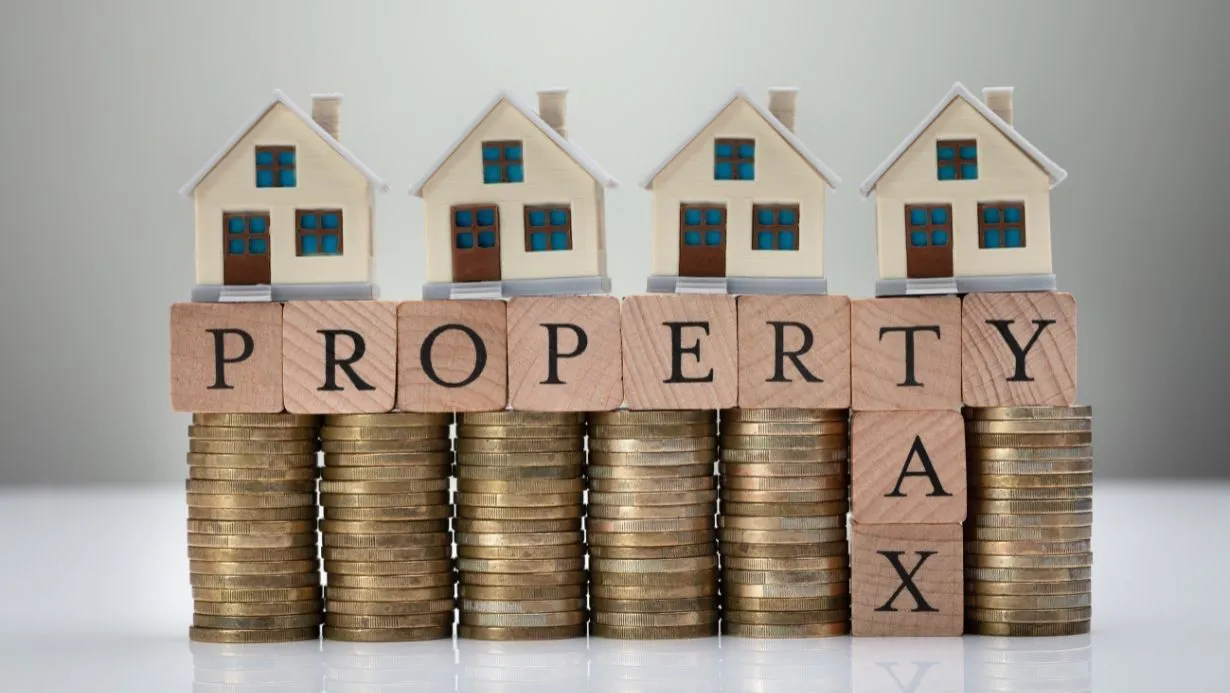
HB 1089: Property Tax Levy Limit
This bill would place a referendum on the ballot to amend the state constitution to require the General Assembly to enact laws that limit how much property tax can be collected. The bill is vague, in that it does not state what, specifically, might result. Importantly, this amendment contains no tax cut or tax reduction – the amendment itself would not change anyone’s tax bill overnight. It only requires the General Assembly to do something about property taxes in a future session by eliminating most local control over property taxes and transferring those powers to the General Assembly itself.
North Carolina law already has a limit on property taxes. No level of government may, on its own, charge more than $1.50 per $100 of value on private property. But this amendment would add new limits on top of these that would give the General Assembly control over local counties’ property tax systems.
This bill passed the House in a 73-46 vote and the Senate 31-19. Former Democrats Majeed and Cunningham again joined Republicans in the House to vote for the proposal, while former Democratic Minority Leader Dan Blue was the lone Democrat to break ranks and vote with Republicans in the Senate. Carolina Forward opposes this bill.
HB 144: Elected State Board of Education and Superintendent As SBE Chair
This bill continues an unhappy trend of changes made to the state government to make basic state functions more partisan, more political, and less fair. Up until now, the Governor has chosen respected educational professionals and leaders to sit on the State Board of Education, subject to confirmation by the General Assembly.
This bill would change that by making the Board members publicly elected. While that could be fine in a fair system, it also gives the legislature authority to draw the districts for their appointment. This would allow a legislature already shaped by aggressive partisan gerrymandering even more power to gerrymander just as aggressively to create a State Board of Election that carries out its partisan agenda. Carolina Forward opposes this bill.
SB 1082: “Right to Work”
North Carolina is a “Right to Work” state. That means that employers and unions are both prohibited from forming agreements that make union membership and the payment of union dues mandatory for employees. North Carolina law also specifically prohibits public sector workers from winning contracts through collective bargaining. This amendment would install that policy in the state constitution. Carolina Forward opposes this bill.
SB 1081 Constitutional Right to Farm
This bill is sheer political theater. Farming is, the last time anyone checked, legal in the State of North Carolina, and will remain so. The only motive we can infer for this bill is that its sponsors are casting about for any tool to boost conservative turnout in an election year likely to be characterized by expensive tariffs and high gas prices. Unfortunately, this could also have negative impacts on plaintiffs seeking to sue big agricultural corporations that are harming their workers, local communities, and the environment.
The Takeaway
North Carolina Legislators are arguing that government revenues – taxes – are making life too expensive.
In fact, the government is the only tool that citizens have to fight back against exploitation by big corporations and the super-rich. People don’t feel that the government is doing a particularly good job, and they’re right. But that’s because the government has been captured by people serving the interests of the same oligarchs who are now pushing to permanently defund it.
Government is a tool over which citizens have direct control to lower the costs they face and to make life more fair. It’s the only entity structurally designed to promote public welfare and not private profit. These legislative proposals are intended to permanently defund that system so that whenever the tide turns, whenever leaders who put people first are back in charge, they won’t have the resources to fix what’s broken in our system and make life genuinely affordable and genuinely fair.