House Bill 2 is unquestionably one of the most infamous pieces of legislation in North Carolina state history. Passed by a Republican supermajority in less than 12 hours, HB 2 mandated that transgender individuals use the bathroom that matches the biological sex listed on their birth certificate, regardless of their gender identity.
The law was widely criticized as discriminatory, unnecessary and cruel; its passage cost North Carolina billions of dollars and thousands of lost jobs; led to travel bans against North Carolina and an NCAA boycott; and made the state into a laughingstock of the nation. The fallout from the bill led to a partial (and for some, begrudging) repeal by moderate Republican lawmakers working with Democrats.
It’s easy to forget, but even then-candidate Donald Trump criticized the bill: “You leave it the way it is… There have been very few complaints the way it is. People go, they use the bathroom that they feel is appropriate. There has been so little trouble.”
Yet as the MAGA movement has embraced more and more extremely conservative politics, many Republican politicians today feel none of the regret their predecessors did nine years ago. Enter SB 516, a bathroom bill even more aggressive, cruel, and poorly planned than HB 2.
Today’s Senate Bill 516 enacts most of the very same ordinances as HB 2, as well as forbidding transgender people from changing the sex on their birth certificate. Moreover, it adds a new wrinkle as well: it offers any person who “encounters” a trans person in any public facility (including schools, community colleges, jails and more) to bring a civil suit against that public entity, entitling them to thousands of dollars in damages. This, in effect, would require any such public entity to physically police access to its bathroom facilities by means the bill leaves unclear.
In the last decade since HB 2, anti-trans hysteria has metastasized, particularly on the political Right, providing a case study in how discrimination towards a tiny and vulnerable minority can be weaponized for political gain.
Anti-trans scapegoating does not “protect women”
While Republicans have increasingly demonized the trans community for political advancement, it’s worth pointing out how small that community truly is. Fewer than 1% of North Carolinians identify as transgender, according to a 2022 study by UCLA’s Williams Institute. Though anti-trans hate speech affects the entire community, a majority of anti-trans speech targets trans women specifically, which most studies suggest comprises less than 40% of trans people overall. It’s likely that much less than one half of one percent of North Carolinians are trans women.
Senate Bill 516’s title is the “Women’s Safety and Protection Act.” Legislation of this sort is typically promoted as “protecting” women and girls, not unlike pro-segregation and anti-miscegenation laws of generations ago, which frequently claimed the same language of guarding feminine safety and virtue. Even putting aside that trans people are over 4 times as likely to experience violent victimization as non-trans people, crimes against women are already illegal. New laws targeting the trans community would, in fact, only subject all women to new invasions of their privacy and forms of harassment - like, for example, being asked to “prove” their bathroom eligibility bona fides.
In requiring single-gender bathrooms to be used only by people of the sex approved by the government, any perceived violation of this rule would require some form of investigation. There have been plenty of instances worldwide, often in sports but also concerning bathroom use, of people accusing women who aren’t transgender of being transgender. Under Senate Bill 516, this would be a serious accusation: a potential violation of state law that would require adjudication. The bill provides no guidance for how that might work.
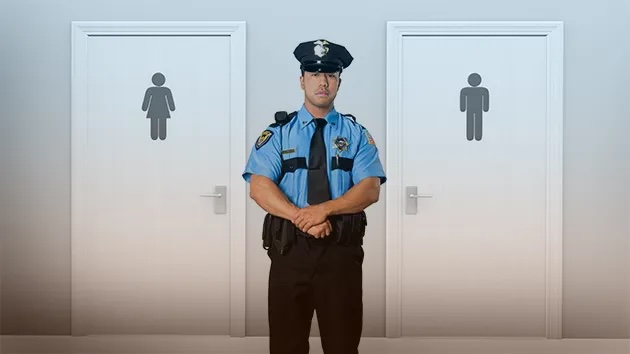
Finally, like HB 2, Senate Bill 516 has no enforcement provisions beyond deputizing private citizens to file lawsuits against government entities. This mechanism has a perverse logic: such a law, which is plainly written to target a small minority in a vulnerable position, can only depend on a Kafkaesque enforcement model. Indeed, the only plausible way that public facilities could comply with Senate Bill 516 would be to appoint taxpayer-funded “gender inspectors” to block access to bathrooms from anyone who could not “prove” their gender. (How does one do that, exactly? And how should children do so with adults?)
Indeed, the fear of simply being accused of violating Senate Bill 516 for having the wrong haircut, body type, or presentation will be omnipresent should it pass.
While all of these problems were shared by HB 2, Senate Bill 516 goes a step further. It completely removes the ability of trans people who have undergone sex reassignment surgery from petitioning the state to change their sex on their own legal documents. The act would mandate that, for example, a trans man who has undergone hormone treatments and surgeries to become a man, and “passes” as a man in all aspects of society, would now be required to use the women’s bathroom - likely causing significant distress for all parties involved.
This was also a problem under the anti-trans bills of the mid-2010s. Trans men pointed this out, often posting photos of themselves making fun of laws that would force them - bearded, muscular men - into women’s bathrooms. Instead of letting trans people do what everyone else does – use the restroom that matches who they are, wash their hands, and leave – conservative scapegoating would causing chaos once again.
What’s this all about?
All of this begs the question: why?
Why would politicians wish to rehash this debate that resulted in a crystal clear repudiation only a decade ago? The answer is that many Republicans now believe the terms of the debate have changed in their favor. After nearly a decade of the virulent transphobic rhetoric spewed by the current president, and the amplification of the same online, open bigotry and cruelty towards trans people has become normalized to some extent, particularly among conservatives.
Inflaming hatred of targeted minorities to win political support is, of course, not a new strategy, especially in the South. But it’s never a bad time to learn from previous generations’ mistakes. In time, anti-trans hate will be remembered for exactly what it is - and the people associated with it should be, too.