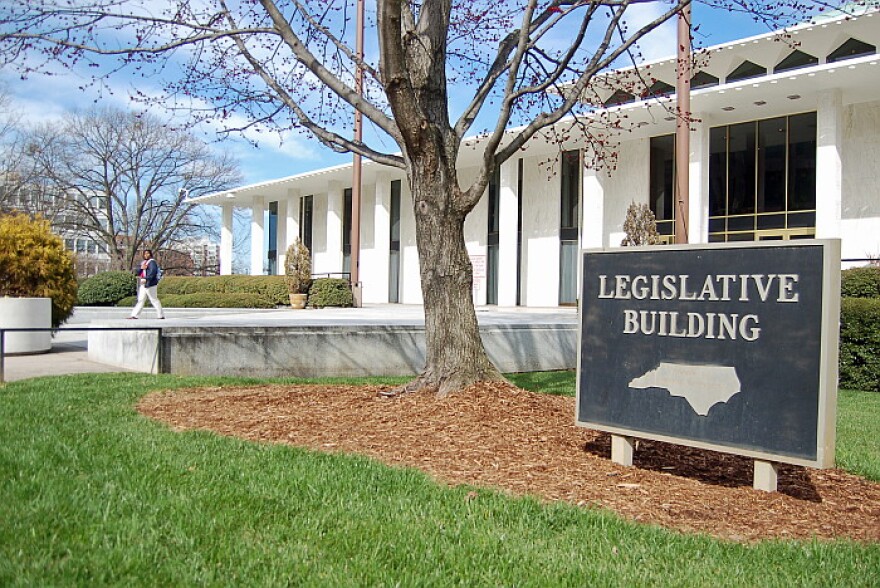
On Tuesday, September 23rd, the NC legislature passed Iryna’s Law with the stated purpose of reducing violent crimes. Iryna Zarutska was a young Ukrainian immigrant who was stabbed on August 22nd while riding Charlotte’s light rail. The local incident gained national attention after a post on X by Elon Musk was seen by President Donald Trump. Subsequently, Republican leadership in the NC legislature, along with the Republican Senate candidate for North Carolina, held a press conference denouncing the violence and announcing new legislation to address such incidents.
Democrats criticized the press conference for politicizing the tragedy by introducing the NC Senate race to replace Thom Tillis into the conversation. After two days of intense floor debate—one in the Senate and one in the House—the bill was approved and sent to Governor Stein for his signature.
But what’s actually in the legislation, and what does it do to address violent crime? Here’s a breakdown:
- Stricter pretrial release rules: Creates a new category of “violent offense” for serious felonies. Defendants charged with these crimes face a rebuttable presumption against release on their own promise to appear. First-time violent offenders require secured bonds or GPS monitoring, while repeat offenders generally require house arrest with monitoring if available. Those with three or more prior convictions (higher than a Class 1 misdemeanor) within 10 years must be released on a secured bond or house arrest with monitoring.
- Elimination of “written promise to appear” bail: Removes this option for magistrates in certain cases, though unsecured bonds are still allowed.
- Mandatory mental health evaluations: Requires judicial officials to order an initial mental health examination for violent offense defendants with recent involuntary commitment or if the official believes the defendant poses a danger.
- Death penalty reforms: Sets timelines for appeals, requires post-conviction proceedings in the county of original conviction, and adds committing a capital felony on public transportation as an aggravating factor.
- Increased magistrate accountability: Failure to make required written findings for pretrial release can lead to suspension or removal. The Chief Justice of the NC Supreme Court can also suspend magistrates.
- Additional resources for Mecklenburg County: Provides funding for 10 assistant district attorneys and five legal assistants.
While there was bipartisan agreement on some provisions, Democrats were denied any input into the legislation, and their recommendations were ignored. The greatest objections to the bill center around the lack of funding included and the changes to the death penalty.
Lack of Funding
Iryna’s attacker, Decarlos Brown, had a history of mental illness, having been “diagnosed with schizophrenia and suffered from hallucinations and paranoia.” Brown’s mother had attempted to get him help. She had obtained an involuntary commitment order for him after he began claiming he “wasn’t in his body.” However, he was released after two weeks, and his mother was subsequently unable to find long-term care for him. Those in the legal system, along with Democrats in the legislature, have stressed the importance of funding mental health services. However, there is no such funding in this bill.
In addition, the legislation lacks funding for more police officers, corrections officers, and public defenders. While there is funding for 10 additional assistant district attorneys and five full-time legal assistants, there is no money included for public defenders or clerks, so the court backlog for offenders is not likely to improve. Furthermore, there is no increase in correctional officers, so though the bill requires increased detention of the accused, it provides no means to implement those detentions.
Death Penalty
Since 1998, lethal injection has been the only method of execution in North Carolina. The last execution to take place in the state was in 2006. Under Iryna’s Law, it will be easier to restart executions in the state. In addition, the legislation limits the time allowed for appeals to two years.
A 2024 Gallup poll showed support for the death penalty at a five-decade low, with only 53% of Americans in favor of it. According to the National Registry of Exonerations, there have been at least 75 exonerations in North Carolina since 1989. The Carolina Journal states there have been 76. A 2014 study by the National Registry of Exonerations estimated that if all death-sentenced defendants remained under sentence indefinitely, 4.1% would be exonerated, and the Innocence Project estimates that about 20,000 innocent individuals are currently sitting in U.S. prisons. Even for those who support capital punishment, this presents a moral quandary. If the death penalty is reinstated, some innocent people will die. Placing a time limit on executions guarantees that number will be higher. Furthermore, even supporters of capital punishment may object to the addition of hangings, firing squads, and the electric chair as methods.
Conclusion
In summary, the murder of Iryna Zarutska was horrific and tragic, but this bill contains nothing that would have prevented it and includes little to prevent other violent crimes. It lacks funding to address our state’s mental health crisis and underfunds our criminal justice system. The provisions on the death penalty and an appeals deadline promise to do more harm than good by executing innocent people, particularly when added to the legislature’s failure to fund the North Carolina Innocence Inquiry Commission this session. Republicans in the North Carolina legislature had the opportunity to respond to Iryna’s death with genuine, bipartisan solutions to address violent crime. Instead, they chose partisan posturing and electioneering.
The bill is now on Governor Stein’s desk.