More than ever, money plays a central and inescapable role in our elections. Yet following campaign finance reporting in North Carolina can be opaque, hard to find, and difficult to understand. That’s why the Carolina Forward team is excited to launch the North Carolina Campaign Finance Tracker (NCMoneyTracker.org).
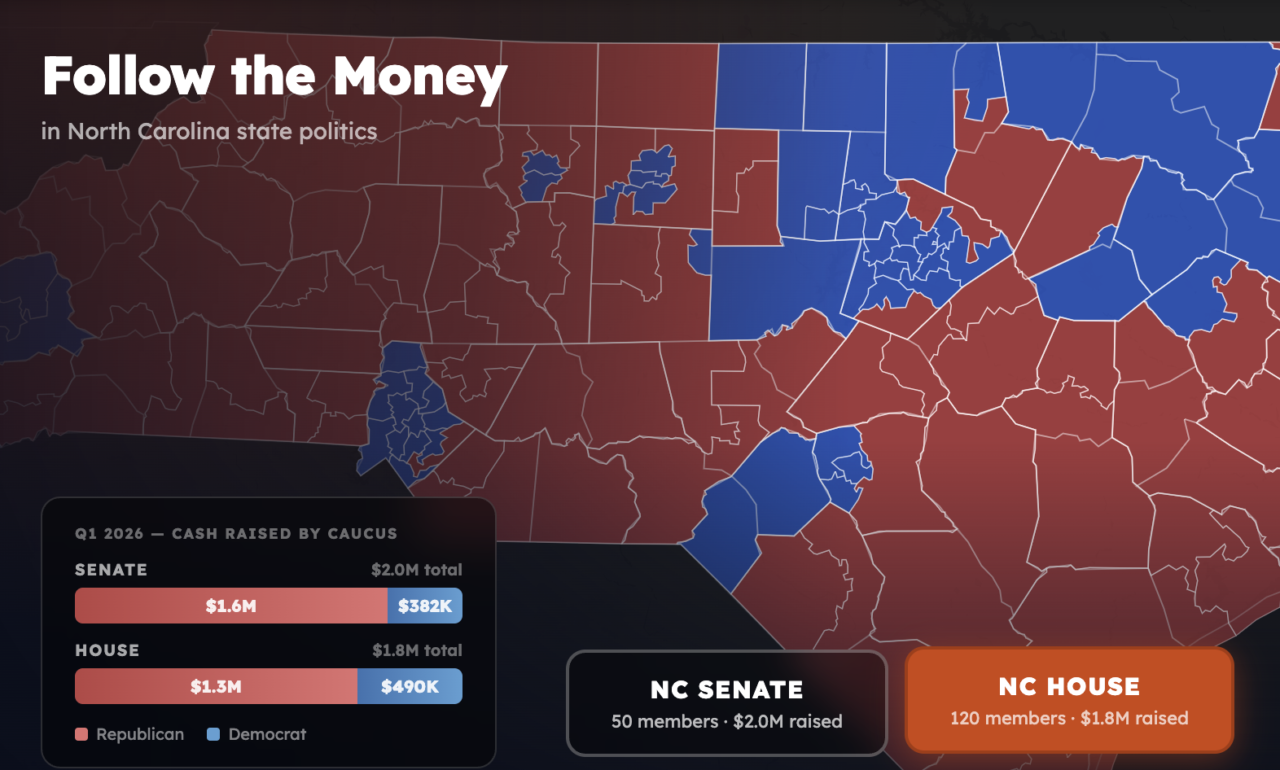
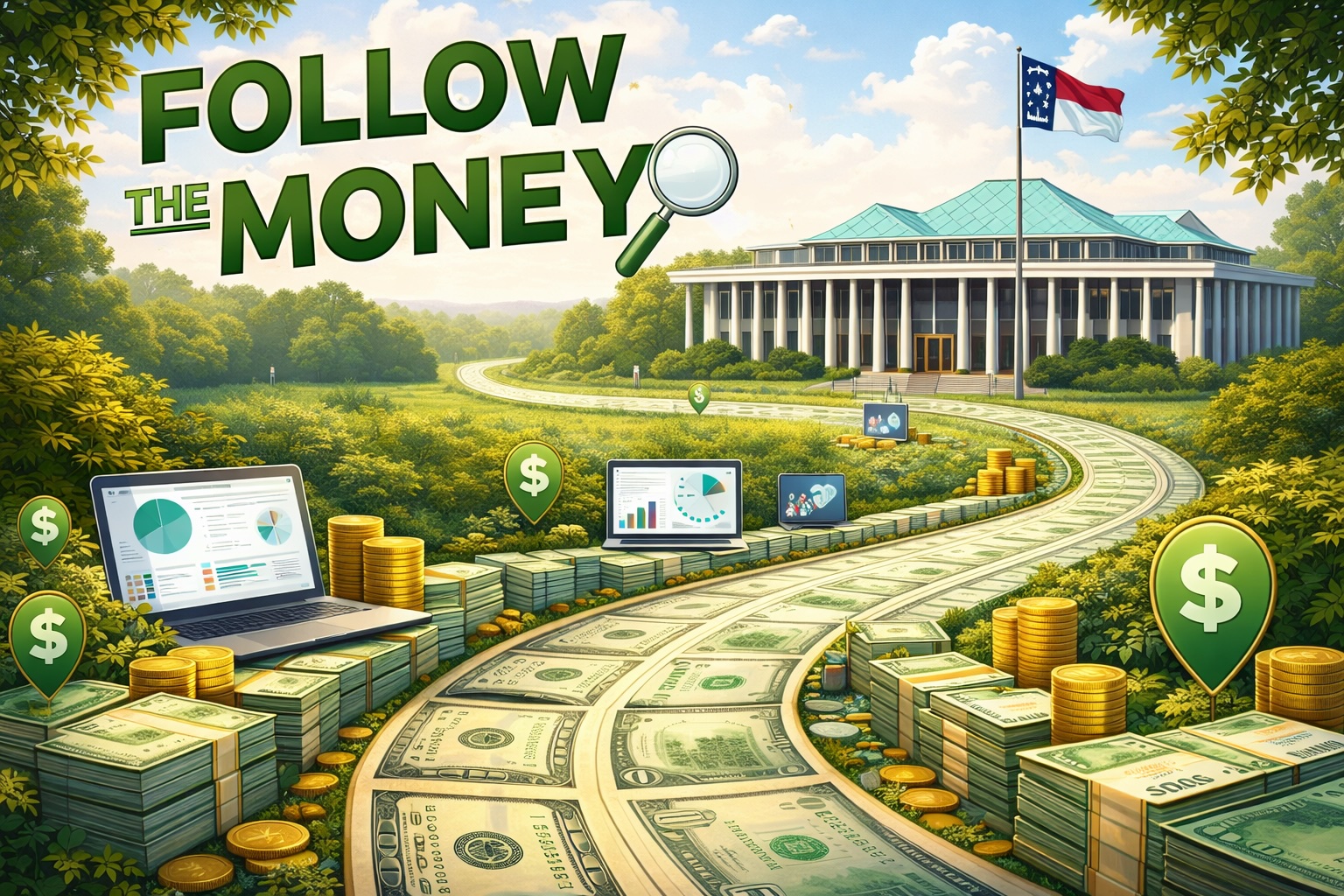
Follow the Money
The oldest wisdom in the book for understanding what politicians do and why was made famous by the 1976 film “All the President’s Men”: follow the money.
Yet doing so first requires knowing how much money our politicians raise; who gives to them, and when; what patterns there are and why they might exist. This is not an easy task to tackle, even for those who understand the somewhat byzantine world of campaign finance under U.S. and North Carolina state law. North Carolina’s State Board of Elections still uses software and systems from 1998. It is both difficult for candidates and political committees to file reports, and even more difficult for the public to search them and understand what they mean. In nearly every way, it is a system designed to be impenetrable by non-experts.
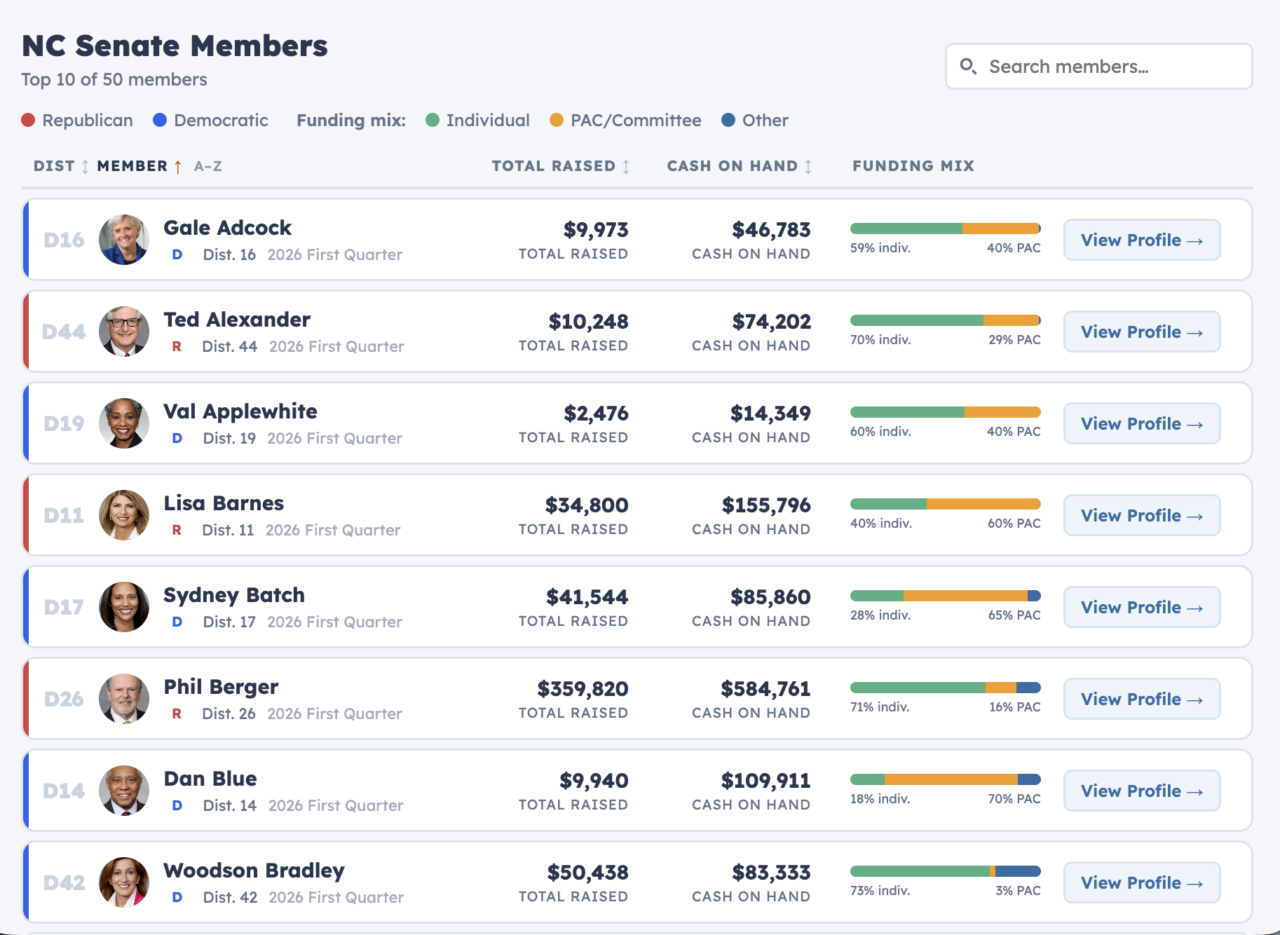
The NC Campaign Finance Tracker helps to solve this problem. The tool reorganizes and visualizes public data taken directly from the State Board of Elections to make it easy to discover, understand and analyze, so that anyone can have a better and clearer understanding the campaign finances of every North Carolina lawmaker:
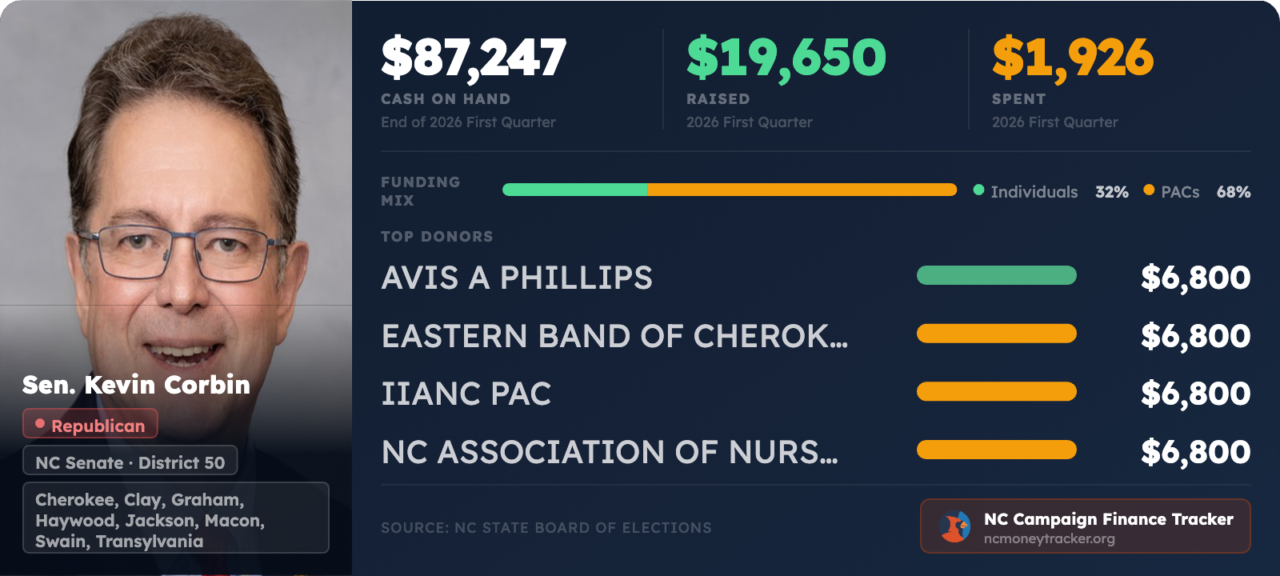
Every member of the North Carolina House and Senate also has a profile page that features their individual funding mix, cash position, industry support and more. Every profile also includes a link back to that member’s full reporting at the State Board of Elections website, so that viewers can inspect the primary source data.
Industry, “Dark Money” Spending, and a Glossary
Political spending by industry groups and independent expenditure PACs (also known as “dark money”) are major factors in North Carolina politics. The Campaign Finance Tracker tackles these categories in two ways:
- Industry: industry clusters frequently spend as a group to advance their financial interests. So we’ve included groups of industries that are particularly active in North Carolina politics to show how they behave collectively.
- Dark Money: the dark money reporting section includes a list of 41 active independent expenditure PACs currently active in North Carolina elections. Each one features basic identification data, a list of donors (where disclosed - not all are), candidates supported/opposed, and a list of expenditures.
- FAQ and Glossary: Campaign finance is a famously complicated topic. That’s why we’ve included built-in resources to answer common questions about how campaign finance works in North Carolina’s politics.
More to come
Currently, the Campaign Finance Tracker only supports all 170 members of the North Carolina State House and State Senate. But there’s much more in store. Work is underway now to add Council of State and Judicial officers, and possibly candidates for office as well in the future.
Are there additions you’d like to see? Questions or feedback? Let us know at info@ncmoneytracker.org what changes you’d like to see.